
What Nutrients Do Dogs Need in Homemade Food?
Cooking for your dog can feel like an act of love right away - fresh ingredients, familiar smells, and the comfort of knowing what is in the bowl. But when owners ask what nutrients do dogs need in homemade dog food, the real question is usually this: how do I make sure a homemade meal is not just fresh, but complete?
That distinction matters. A meal can look wholesome and still fall short over time. Dogs need the right balance of protein, fat, essential vitamins, and minerals every day, not just a plate of chicken and vegetables. Homemade feeding can work well, but it works best when nutrition comes first.
What nutrients do dogs need in homemade dog food?
Dogs need six broad categories of nutrients in homemade food: protein, fat, carbohydrates, vitamins, minerals, and water. Not every dog needs the exact same ratio, but every complete diet needs those categories covered in the right amounts.
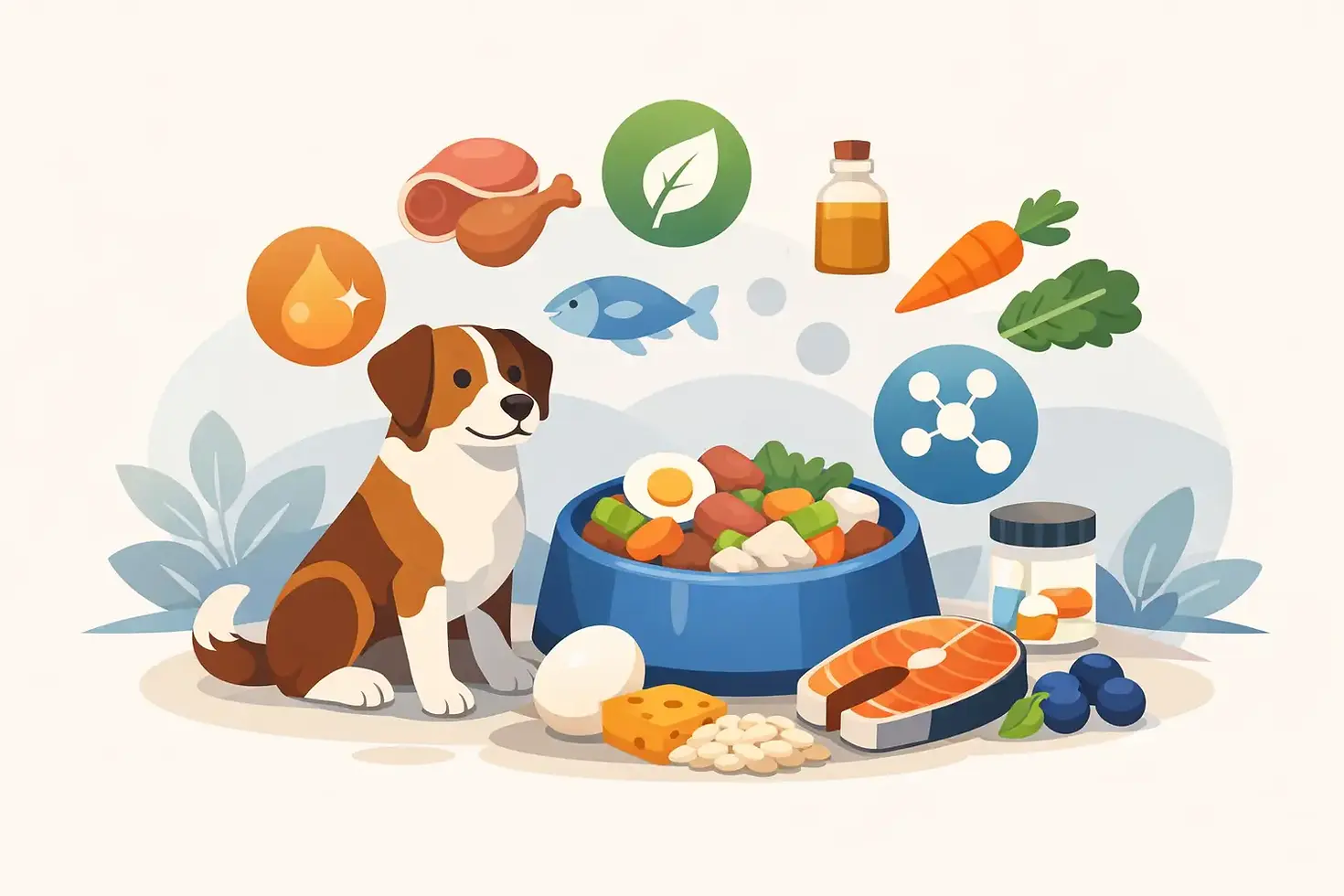
Protein helps maintain muscle, skin, the immune system, and normal body repair. Fat provides concentrated energy and supports the skin, coat, brain, and absorption of certain vitamins. Carbohydrates are not always essential in the same way protein and fat are, but they can be a useful energy source and can add fiber and digestible nutrients. Vitamins and minerals support everything from bone strength to nerve function. Water, often overlooked, is critical to digestion, circulation, and temperature regulation.
The challenge with homemade diets is not usually the main ingredients. It is the nutrient gaps hiding underneath them.
Protein is the foundation, but it is not the whole meal
Most owners start with meat, and that makes sense. Dogs need adequate high-quality protein to maintain lean body mass and support everyday function. Common homemade choices include chicken, turkey, beef, lamb, fish, and eggs.
But feeding only muscle meat creates problems. Muscle meat is rich in phosphorus and often low in calcium. It also does not automatically provide the full spread of trace minerals and vitamins a dog needs in the right amounts. Organ meats can help fill some gaps, especially liver, which supplies vitamin A and other key nutrients. Still, organ meat must be used carefully. Too little does not help much, and too much can throw the diet off balance.
The takeaway is simple: protein matters, but more meat does not always mean a better homemade diet.
Fat supports energy, skin, and coat health
Fat is often misunderstood because owners worry about weight gain. The truth is that fat is a necessary part of a balanced canine diet. It supplies energy, improves food palatability, and supports healthy skin and coat.
Dogs also need essential fatty acids, especially omega-6 and omega-3 fats. These play a role in inflammation, skin health, and overall wellness. Animal fats provide some of what dogs need, and certain fish can contribute beneficial omega-3s. But balance matters here too. A diet that is too low in fat may leave a dog with dry skin, poor coat quality, or low energy, while too much fat may not suit dogs prone to digestive upset or pancreatitis.
This is one reason homemade feeding is rarely one-size-fits-all. A very active dog and a sedentary indoor dog will not always do well on the same fat level.
Carbohydrates can be useful, even if they are not the star
Some homemade dog food plans avoid carbs entirely. Others rely heavily on rice or sweet potato. In reality, carbohydrates can be helpful when chosen and prepared well.
Cooked rice, oats, pumpkin, and sweet potato can provide digestible energy and fiber. Vegetables can also contribute useful nutrients, though dogs do not process raw produce the same way humans do. In many cases, cooking improves digestibility.
That said, carbohydrates should not crowd out more essential nutrients. If a homemade meal is built mostly around starch with a small amount of meat, it may be filling without being nutritionally complete. The goal is not simply to add bulk. The goal is to support balanced nutrition.
Calcium is one of the biggest homemade diet mistakes
If there is one nutrient category owners most often miss, it is minerals - especially calcium. Dogs need calcium for bones, teeth, muscle contraction, and nerve signaling. When homemade meals are built from meat alone, calcium is usually far too low and phosphorus is too high.
That imbalance may not show up after a few meals, which is why it is easy to miss. Over weeks and months, though, an unbalanced calcium-to-phosphorus ratio can create serious health concerns. This is especially risky in growing puppies, but adult dogs also need proper mineral balance for long-term health.
Adding random supplements is not the same as proper formulation. Calcium needs to be added in the right form and amount relative to the whole recipe. The same is true for other minerals such as zinc, copper, iron, iodine, selenium, magnesium, and potassium. Some ingredients supply part of these needs naturally, but homemade diets often need very careful planning to meet them consistently.
Vitamins are easy to underestimate
Vitamins do a great deal of quiet work in a dog's body. Vitamin A supports vision and immune function. B vitamins help with metabolism and energy use. Vitamin D supports calcium regulation. Vitamin E acts as an antioxidant. Vitamin K contributes to normal blood clotting.
A homemade meal made from fresh ingredients may sound naturally rich in vitamins, and sometimes it is. But variety alone does not guarantee adequacy. Some vitamins are sensitive to cooking, while others can become excessive if organ meats or supplements are overused.
This is where many well-meaning recipes fall short. They may look healthy on paper because they include meat, rice, and vegetables, but they are not designed to hit recognized nutritional targets day after day.
Water still counts as a nutrient
Fresh homemade meals often contain more moisture than dry food, which can be a real advantage for many dogs. Better moisture intake may support hydration and can make meals more appealing, especially for picky eaters.
Still, dogs on homemade diets should always have access to fresh water. Moist food helps, but it does not replace normal hydration needs, especially in warm weather or for active dogs.
Homemade dog food needs balance, not guesswork
The biggest issue with homemade feeding is consistency. It is easy to prepare one good meal. It is much harder to prepare a complete and balanced diet every single day.
Small errors add up. Too little calcium, too much liver, not enough essential fatty acids, or missing trace minerals may not cause immediate symptoms. But nutrition works over the long term. A dog can seem fine while deficiencies or excesses slowly develop.
That is why veterinary guidance matters. Homemade diets are safest when formulated to meet established standards for adult maintenance and tailored to the individual dog. Age, activity level, body condition, medical history, and food sensitivities all influence what a balanced recipe should look like.
What ingredients often appear in a balanced homemade recipe?
A more complete homemade recipe often includes a primary protein source, a controlled fat source, digestible carbohydrates if appropriate, selected vegetables, and a properly measured vitamin-mineral component. Depending on the recipe, eggs, fish, or organ meats may be included in small, purposeful amounts.
What should not happen is throwing together chicken breast, white rice, and carrots and assuming that fresh equals complete. It may be a better ingredient list than many owners are used to seeing, but ingredient quality and nutrient completeness are not the same thing.
For busy dog owners, that difference can become exhausting. You want fresh food. You want real ingredients. But you also want confidence that the bowl is actually meeting your dog's needs.
When homemade feeding makes sense - and when support helps
Homemade dog food can make sense for owners who are committed to recipe precision, portion control, and ongoing nutritional oversight. It can also be helpful in certain dogs with very specific dietary needs, when guided by a veterinarian.
But for many households, the harder part is keeping it balanced week after week. Shopping, prep, storage, portioning, and supplementation take time. So does reviewing whether the diet is still appropriate as your dog ages or health needs change.
That is why many owners look for fresh food that offers both real ingredients and nutritional credibility. Vet-formulated fresh meals, such as those from The Farmer's Best Friend, can give dog parents the freshness they want without leaving essential nutrition to chance.
If you love the idea of feeding fresh, you are asking the right question. What nutrients do dogs need in homemade dog food is really a question about care, and the best answer is one that protects your dog's health not just today, but with every bowl after that.



Comments