
Fresh Dog Food vs Kibble: What Matters?
- The Farmer's Best Friend
- 3 days ago
- 5 min read
Your dog’s bowl says a lot about how you care for them. For many pet parents, the real question behind fresh dog food vs kibble is not just price or preference. It is whether the food feels trustworthy, supports long-term health, and still fits into a busy routine.
That is why this comparison matters. Most owners are not choosing between “good” and “bad.” They are choosing between two very different ways of feeding, each with its own strengths, trade-offs, and level of transparency.
Fresh dog food vs kibble: the biggest difference
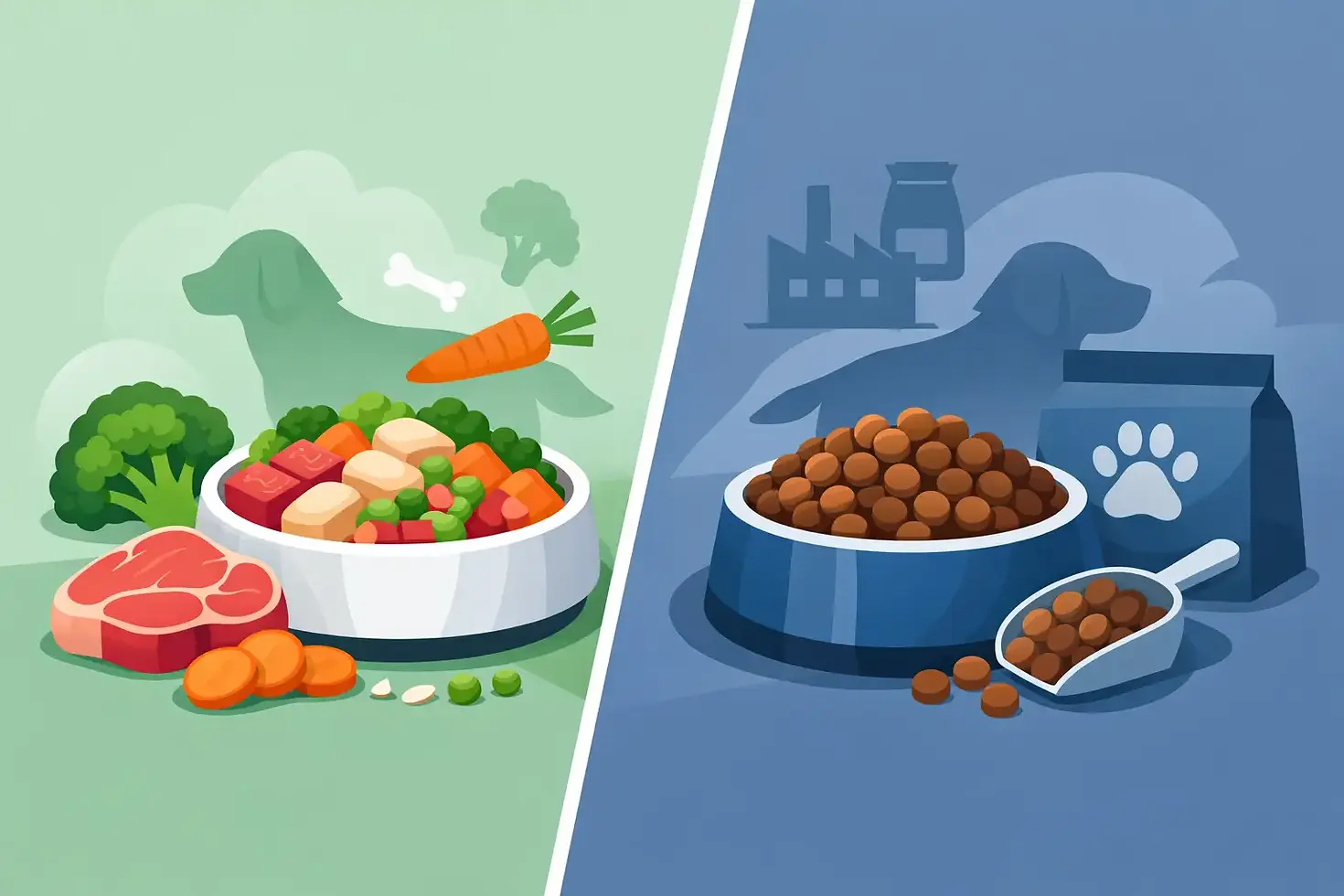
The clearest difference is how the food is made and what that means for the final bowl. Fresh dog food is typically made with real meat, vegetables, and other recognizable ingredients, then gently cooked to support safety and nutrient retention. Kibble is usually made through a high-heat extrusion process that turns a mixture of ingredients into dry pellets designed for shelf stability.
That processing difference affects more than appearance. It often shapes smell, texture, moisture content, ingredient clarity, and how appealing the food is to dogs. Fresh food looks and smells more like actual food. Kibble is built for convenience and long storage.
Neither format is automatically perfect or harmful. What matters is the quality of the formula, whether it is complete and balanced, and how well it suits your dog’s needs.
Ingredient quality and transparency
Many owners start here, and for good reason. Fresh dog food often appeals to people who want clearer labels and fewer question marks. When you see chicken, beef, carrots, or pumpkin listed in a way that feels familiar, it can be easier to understand what you are feeding.
Kibble labels can be harder to interpret. Some high-quality dry foods are carefully formulated and nutritionally sound, but the ingredient panel may include rendered meals, by-products, flavoring agents, and preservatives that make owners pause. That does not always mean the food is poor quality, but it can make comparison harder for people who value simple, clean-label feeding.
If you are looking at fresh dog food vs kibble through the lens of ingredient trust, fresh food often feels more transparent. For many pet parents, that peace of mind matters as much as the nutrient profile itself.
Nutrition is about formulation, not marketing
Fresh food has a strong emotional pull because it looks wholesome. But appearance alone is not enough. Dogs need complete and balanced nutrition, not just attractive ingredients.
A well-made fresh recipe should be formulated to meet recognized nutritional standards for the appropriate life stage. Veterinary input matters. So does evidence that the food is designed for adult maintenance or another clearly defined feeding need.
The same standard applies to kibble. A bag can make bold claims, but what matters is whether the formula actually delivers balanced protein, fat, vitamins, and minerals in the right proportions.
This is where owners should be careful. Homemade-style does not always mean nutritionally complete. Premium-looking packaging does not guarantee quality either. The smartest question is simple: was this food formulated properly for dogs, or is it relying on marketing language to fill the gap?
Digestibility and how dogs feel on the food
One reason some owners switch from kibble to fresh food is that their dog simply seems to do better on it. Better stool quality, stronger appetite, fewer mealtime struggles, and easier digestion are common reasons people explore fresh feeding.
Fresh food usually contains more moisture than kibble, which can help with palatability and hydration. Some dogs, especially picky eaters or older adults, find it easier to eat and enjoy. For dogs with sensitive stomachs, a simpler ingredient profile may also help, although that always depends on the specific formula and the dog’s individual triggers.
Kibble can work very well for many dogs, especially when they tolerate it well and maintain healthy weight, energy, and stool quality. But because it is dry and heavily processed, some dogs are less enthusiastic about it, and some owners notice digestive differences after switching to fresh.
There is no universal result. One dog thrives on a carefully chosen kibble. Another does noticeably better on fresh meals. Watching your own dog matters more than following trends.
Convenience is not one-sided
Kibble has long been considered the easiest option. It is shelf-stable, easy to portion, and simple to store. For households with long workdays, multiple caregivers, or limited fridge space, that convenience is real.
But fresh food has changed a lot. For many modern pet owners, especially those balancing packed schedules, pre-portioned or clearly guided fresh meals delivered to the home can actually reduce effort. There is no grocery run, no cooking, and no guesswork around building a complete recipe from scratch.
That is an important shift. The choice is no longer between dry pellets and spending your Sunday batch-cooking for the dog. A well-designed fresh food service can make high-quality feeding feel manageable every day.
So when comparing fresh dog food vs kibble, convenience depends on the system behind the food, not just the format. Delivery, storage, portion guidance, and feeding support all matter.
Cost and value
Fresh dog food usually costs more than kibble. That is one of the biggest reasons some owners hesitate. The higher price reflects ingredient quality, cooking method, packaging, cold-chain handling, and delivery logistics.
Kibble is generally the budget-friendlier option, especially for larger dogs. It can be easier to buy in bulk and store for longer periods, which helps households managing monthly costs.
But cost is only one part of value. Some owners are willing to pay more for food that feels cleaner, more appetizing, and more aligned with how they want to care for their dog. If fresh food leads to more consistent eating, better portion control, or fewer worries about fillers and preservatives, that added cost may feel justified.
The practical question is not whether fresh food is cheaper. It usually is not. The better question is whether the added value matches your priorities and your dog’s response.
What about dental health?
This topic comes up often, and it is worth handling carefully. Kibble is sometimes assumed to clean teeth simply because it is dry and crunchy. In reality, standard kibble is not a substitute for proper dental care. Many dogs break kibble quickly, with limited brushing effect on the tooth surface.
Fresh food is softer, so it should not be viewed as dental care either. Tooth brushing, dental chews, professional cleanings, and your veterinarian’s guidance remain the real tools for oral health.
If dental support is part of your decision, do not expect either fresh food or kibble to do the whole job on its own.
Which dogs may benefit most from fresh food?
Fresh food can be especially appealing for picky eaters, dogs that need more enticing meals, and owners who prioritize ingredient transparency. It may also suit households that want expert-backed nutrition without having to prepare food themselves.
For busy owners, this matters more than ever. When meals are vet-formulated, complete and balanced, and delivered to your doorstep, feeding well becomes easier to sustain. That consistency is often the difference between good intentions and daily follow-through.
Brands such as The Farmer’s Best Friend are built around that idea - real ingredients, veterinary formulation, and practical convenience for everyday life.
So, should you choose fresh food or kibble?
If your dog is healthy, thriving, and doing well on a high-quality kibble, there may be no urgent reason to switch. Dry food can be a valid choice when it is complete and balanced, well tolerated, and workable for your home.
But if you have been questioning ingredient quality, worrying about heavy processing, or feeling underwhelmed by what is in the bowl, fresh food is worth serious consideration. It offers a different feeding experience - one that feels closer to real food, often with stronger ingredient clarity and better mealtime appeal.
The best choice comes down to your dog, your standards, and your routine. Look for complete and balanced nutrition, credible formulation, and a feeding approach you can maintain consistently.
Your dog does not need a perfect trend. They need food you can trust, food they will eat happily, and a routine that makes caring for them feel a little easier every day.


Comments