
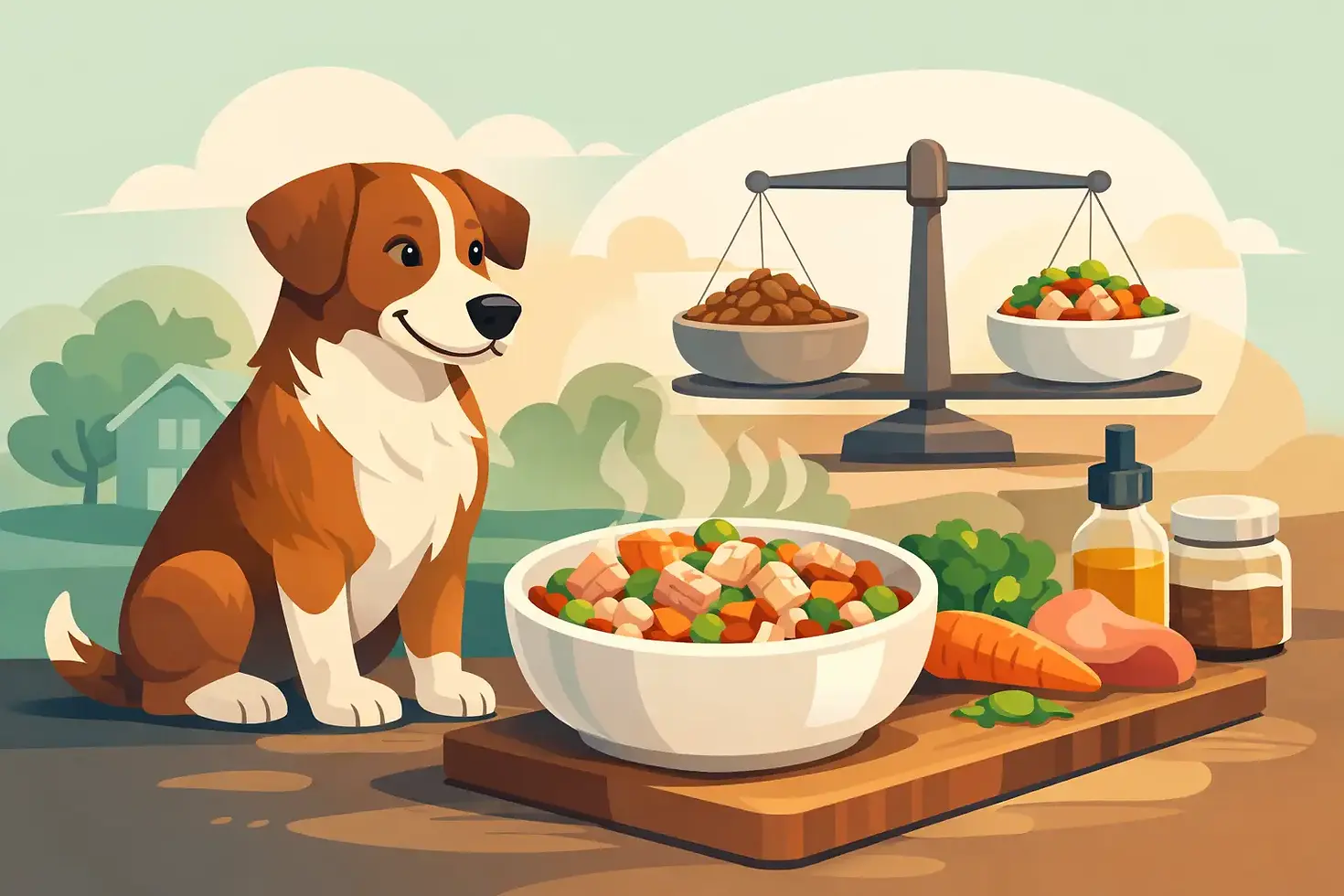
Is Gently Cooked Dog Food Worth It?
- The Farmer's Best Friend
- Jul 4
- 6 min read
If your dog inhales dinner in seconds but turns away from dry kibble by day three, you are not imagining the difference. Gently cooked dog food has become a go-to option for pet parents who want fresher, more appealing meals without taking on the work of cooking from scratch.
For many households, the appeal is simple. You want food that looks like real food, supports your dog’s long-term health, and fits into an already packed week. That is where gently cooked meals stand out. They offer a middle ground between heavily processed dry food and homemade diets that can be difficult to balance correctly.
What gently cooked dog food actually means
Gently cooked dog food is made with real ingredients that are cooked at controlled temperatures to help preserve nutrients, texture, and flavor better than high-heat processing methods. Instead of being rendered into shelf-stable pellets, the ingredients remain closer to what you would recognize in a fresh meal.
That distinction matters. Many dog owners use the word fresh loosely, but not all fresh-style foods are nutritionally complete, and not all cooked foods are prepared with the same level of care. A well-made gently cooked recipe should do more than look appetizing. It should also be formulated to provide complete and balanced nutrition for adult maintenance.
This is where quality standards become important. Real meat and vegetables are a good start, but ingredients alone do not guarantee nutritional adequacy. Dogs need the right balance of protein, fats, essential vitamins, and minerals over time. The best gently cooked diets combine visible ingredient quality with veterinary formulation and recognized nutritional standards.
Why more dog owners are choosing gently cooked dog food
The shift is not only about trends. It reflects a real change in how people think about feeding their dogs. Many pet parents now read labels more closely, question fillers and preservatives, and want more confidence in what goes into the bowl every day.
Gently cooked dog food answers several of those concerns at once. It feels more transparent because the ingredients are easier to recognize. It feels more intentional because the recipes are often built around nutritional goals rather than low-cost bulk ingredients. And for dogs, it is often more enjoyable to eat, which can be a relief for owners dealing with picky appetites.
There is also the convenience factor. Busy professionals may want to feed fresh food, but they do not have time to source ingredients, portion meals, and calculate nutrient needs on their own. Fresh delivery changes that equation. You get the benefit of a ready-made meal without the guesswork that often comes with home preparation.
How it compares with kibble
Kibble remains popular for obvious reasons. It is easy to store, easy to serve, and often cheaper upfront. For some dogs, it works just fine. But convenience does not automatically make it the best fit for every dog or every household.
The biggest difference comes down to processing. Kibble is typically made using high heat and industrial methods that prioritize shelf stability. That allows for long storage life, but it can also move the final product further away from whole-food ingredients in their original form.
Gently cooked dog food is less processed in that sense. The ingredients retain more of their natural appearance and moisture, which can improve palatability. Some owners also prefer the cleaner-label approach often associated with fresh meals, especially when they are trying to avoid unnecessary fillers or preservatives.
That said, fresh food is not automatically superior just because it sounds better. It depends on formulation, ingredient sourcing, and whether the food is complete and balanced. A poorly designed fresh recipe can be less suitable than a properly formulated conventional food. The real comparison is not fresh versus kibble in the abstract. It is well-formulated food versus poorly formulated food.
The nutrition question pet parents should ask first
When evaluating any fresh meal, the first question should not be whether it looks healthy. It should be whether it is nutritionally complete for your dog’s life stage.
This is especially important because homemade-style feeding has become more common, and not all recipes meet a dog’s actual nutrient needs. Dogs require more than meat and vegetables. They need specific levels of calcium, phosphorus, essential fatty acids, trace minerals, and vitamins in the right proportions.
A gently cooked recipe that is vet-formulated and aligned with AAFCO standards offers a stronger level of confidence. That tells you the food is designed for more than short-term appeal. It is built to support ongoing adult maintenance in a structured, responsible way.
For owners who feel overwhelmed by pet nutrition advice online, this matters. You should not have to become a canine nutrition expert just to feed your dog well. Credible formulation helps remove the uncertainty.
Ingredient quality matters, but so does what is left out
Fresh food conversations often focus on what is included, and for good reason. Real meat, visible vegetables, and recognizable ingredients create trust. But what a food leaves out matters too.
Many owners specifically look for meals without fillers or artificial preservatives because they want a cleaner, simpler feeding routine. That does not mean every additive is bad, but it does reflect a broader desire for transparency. If a label is hard to understand, people naturally question it.
Gently cooked dog food tends to appeal to this mindset because it often offers a shorter, more recognizable ingredient list. For pet parents trying to make better daily choices, that simplicity can be reassuring.
Still, there is a practical trade-off. Fresh meals require cold storage and more planning than pouring from a bag. For some households, that is a small adjustment. For others, especially those balancing long workdays, it only works if ordering and portioning are made easy.
Why convenience is part of good nutrition
There is a tendency to treat convenience as separate from quality, as if the best feeding choice must also be the hardest one. In real life, that is rarely true.
A feeding plan only works if you can stick to it. If buying, preparing, and portioning your dog’s food feels complicated, consistency starts to slip. You run out. You substitute. You delay. Over time, even well-meaning owners can end up in a pattern that is less consistent than they intended.
That is why home delivery has become such an important part of the fresh food category. Ready-to-serve, portion-friendly meals help bridge the gap between intention and habit. For working pet parents, that can be the difference between wanting to feed better and actually doing it every day.
Brands like The Farmer’s Best Friend are built around that reality, combining vet-formulated gently cooked meals with doorstep delivery so feeding fresh feels manageable, not overwhelming.
Is gently cooked dog food right for every dog?
Not always. Some dogs do well on a variety of feeding approaches, and some households need the lower cost or room-temperature storage that kibble offers. Budget, freezer space, and your dog’s specific health needs all play a role.
It also depends on what you are trying to solve. If your dog eats well, maintains a healthy weight, and is thriving on a complete and balanced diet, switching may be more about preference than necessity. But if you are looking for higher ingredient transparency, stronger palatability, or a less processed daily meal, gently cooked food may be a better fit.
This is also where personalized feeding guidance helps. Portion sizes, calorie needs, and transition plans should reflect your dog’s age, size, activity level, and body condition. Feeding too much of even a very good food can create problems. Feeding too little can do the same.
What to look for before you buy
If you are considering a switch, focus on a few markers of credibility. Look for recipes formulated for complete and balanced nutrition, ideally with veterinary input. Check whether the brand is clear about ingredients, feeding guidance, and intended life stage. And pay attention to whether the product fits your routine, not just your ideals.
That last point is easy to overlook. The best food for your dog is one you trust, your dog enjoys, and your household can feed consistently. Fresh meals should make life easier while supporting your dog’s health, not add a layer of daily stress.
A good gently cooked diet can offer real advantages: fresher ingredients, strong palatability, clear labeling, and expert-backed nutrition. But the smartest choice is the one that balances those benefits with practicality.
If feeding time has started to feel like a compromise between convenience and care, it may be worth taking a closer look at what is in the bowl. Sometimes the better option is the one that helps you feel confident every single day.


Comments