
Raw Diet vs. Commercial Pet Food: Pros and Cons
- edgartanjr
- Mar 11, 2025
- 2 min read
Updated: Jun 17, 2025

The debate over raw diets versus commercial pet food has been a topic of discussion among pet owners and veterinarians. Both dietary approaches have their advantages and disadvantages, and pet owners must consider several factors before deciding on a feeding method.
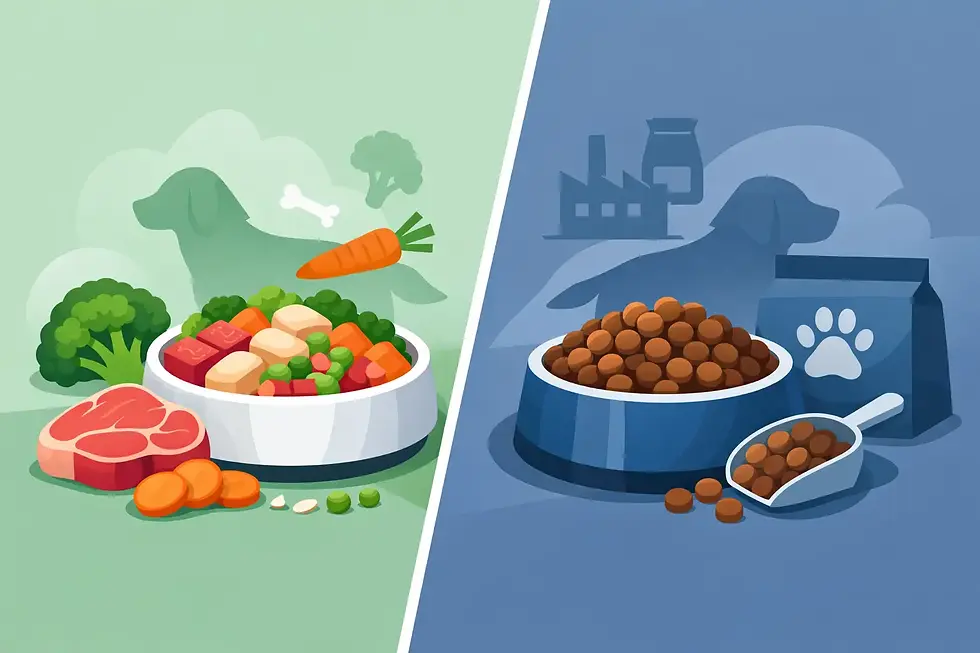
Raw diets, often referred to as Biologically Appropriate Raw Food (BARF), consist of raw meat, bones, fruits, and vegetables. Proponents argue that this diet mimics what animals would eat in the wild, leading to improved digestion, healthier coats, and fewer allergies. Additionally, raw food is free from artificial preservatives and fillers commonly found in commercial pet foods.
However, raw feeding has risks. Handling raw meat poses a threat of bacterial contamination, such as Salmonella and E. coli, which can harm both pets and humans. Moreover, achieving a nutritionally complete and balanced raw diet can be challenging. Without proper supplementation, raw diets may lack essential vitamins and minerals, leading to deficiencies.
On the other hand, commercial pet food, whether dry kibble or wet canned food, is formulated to meet the nutritional standards set by regulatory bodies such as the Association of American Feed Control Officials (AAFCO). These diets provide convenience and ensure pets receive the necessary nutrients in appropriate proportions.
Nonetheless, not all commercial pet foods are of high quality. Some contain artificial additives, by-products, and excessive carbohydrates, which may contribute to obesity and health issues. Pet owners must research brands and select high-quality options that prioritize animal protein and whole ingredients.
Ultimately, the choice between raw and commercial pet food depends on individual pet needs, owner preferences, and lifestyle. Consulting a veterinarian can help determine the most suitable diet for a pet’s health and well-being.


Comments